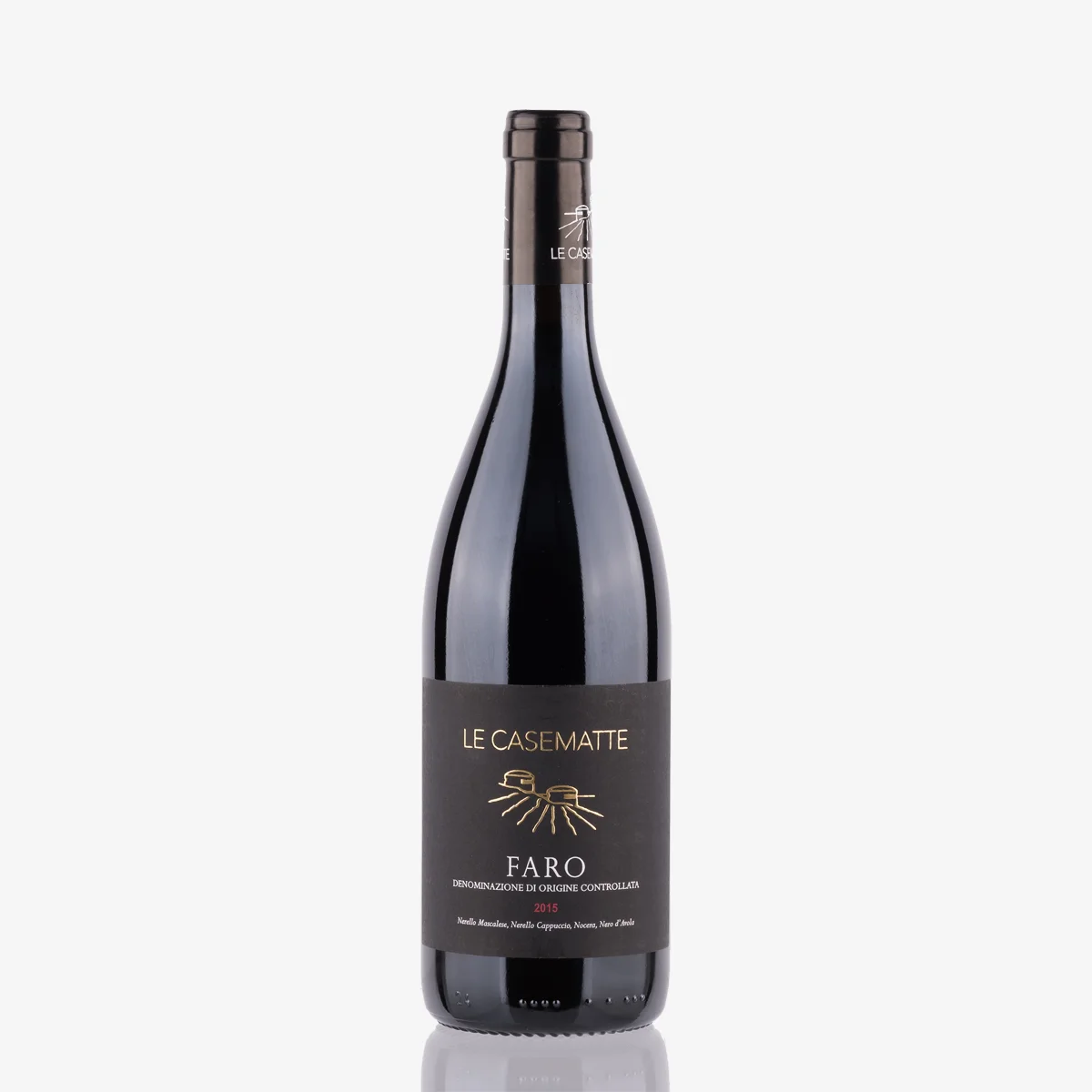
Capo Peloro lies at the north-eastern tip of Sicily, in the province of Messina, where the Tyrrhenian Sea and the Ionian Sea meet in the Strait. It is a unique landscape, characterised by coastal dunes, the brackish lakes of Faro and Ganzirri, sea currents and the proximity of the Peloritani Mountains. This interplay of environments creates a bright and breezy Mediterranean climate, in which the breezes from the Strait help to limit humidity and promote the balanced ripening of the grapes.
From a geological perspective, Capo Peloro features a complex coastal morphology, comprising sandy and silty sediments, pebbles and conglomerate formations such as the characteristic beach rock. In the Messina wine-growing area linked to the promontory, the vineyards are mainly situated on the hillsides and foothills, where medium-textured alluvial soils prevail, with a clay component and varying proportions of limestone, sand and minerals. The slopes and aspect require careful management of the canopy, pruning and water management, in accordance with traditional practices that respect the vine’s natural balance.
The ampelographic heritage is dominated by indigenous red grape varieties, including Nerello Mascalese, Nerello Cappuccio and Nocera, alongside, in smaller proportions, Calabrese, Gaglioppo and Sangiovese. From this mosaic emerges the character of the wines from the Faro area, a historic expression of Messina’s viticulture: dry, harmonious and long-lived reds, capable of combining structure, freshness and a recognisable Mediterranean character. The sea breezes, the light reflected off the Strait and the presence of Mediterranean scrub all contribute to defining a fragrant, savoury and dynamic character. The local winemaking tradition has its roots in antiquity and continues today through meticulous winemaking, carefully controlled ageing and the promotion of historic grape blends.